



What Are You Looking For?
Lockdown becomes a reality! The photovoltaic industry faces its "most dangerous opportunity."
Mar 05, 2026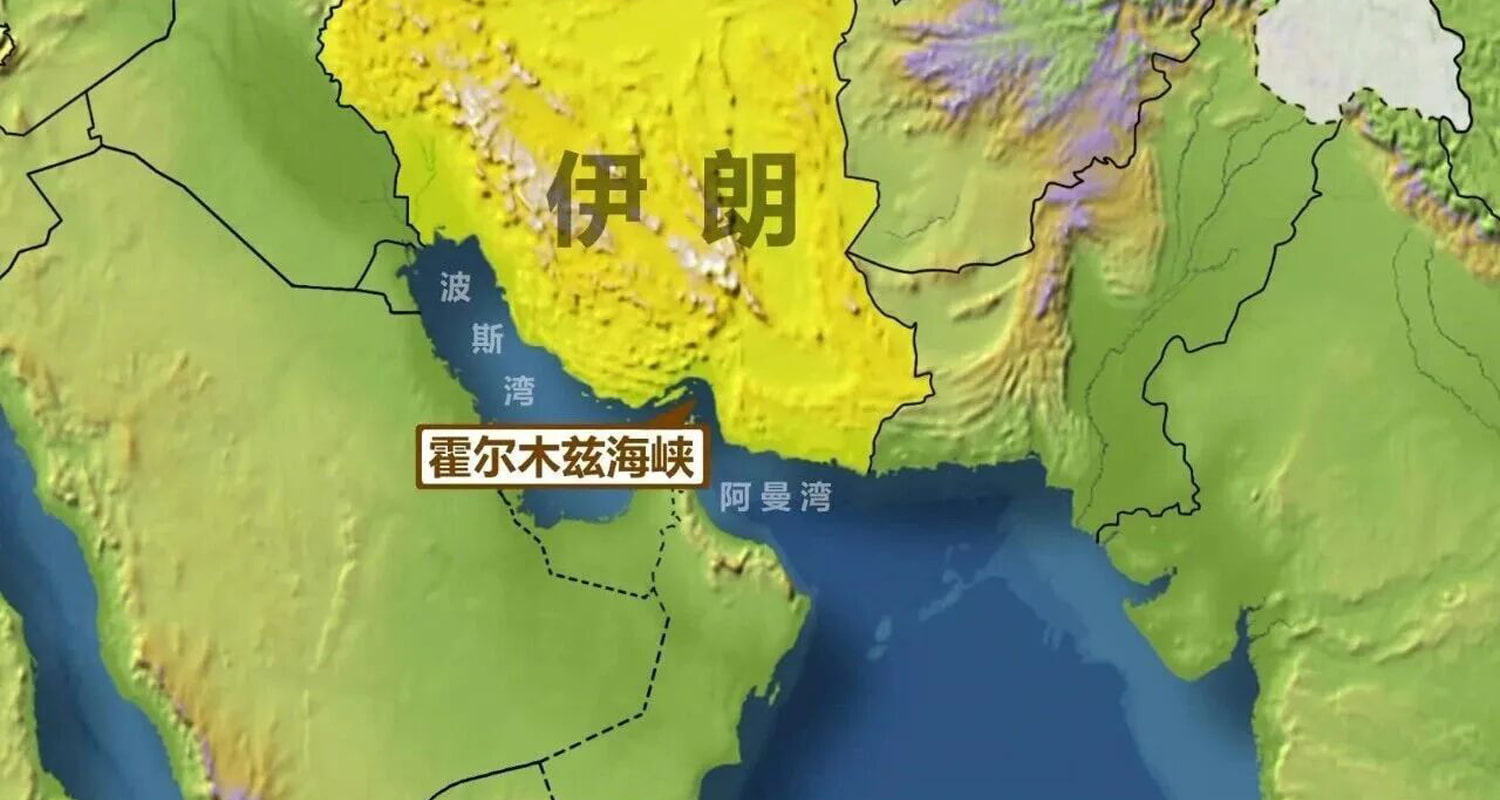
A strait that has never truly been closed is becoming a "trigger point" for the global energy market.
On February 28, the United States and Israel launched military strikes against Iran. That evening, the Iranian Islamic Revolutionary Guard Corps announced a ban on any ships passing through the Strait of Hormuz.
Almost simultaneously with the news, oil and gas prices surged.
Related data shows that as of the close of trading on March 3, the price of light sweet crude oil futures for April delivery on the New York Mercantile Exchange closed at $74.56 per barrel, an increase of 4.67%; the price of Brent crude oil futures for May delivery on the London ICE Futures Exchange closed at $81.40 per barrel, an increase of 4.71%.
Meanwhile, the price of Dutch TTF natural gas futures for April delivery, a benchmark in the European market, was €54.290 per megawatt-hour, an increase of 21.98%. The price of British natural gas futures for the same month also rose sharply by 23.90%, to 140.990 pence per calorific unit, equivalent to approximately £1.41.
01. The Strait of Hormuz: A Chopped Energy Chokepoint
If the global energy system is likened to a complex network of blood vessels, then the Strait of Hormuz is a particularly vital aorta.
This waterway connecting the Persian Gulf and the Indian Ocean is the maritime export route for crude oil from key Middle Eastern oil-producing countries such as Saudi Arabia, Iraq, the UAE, Kuwait, Iran, and Qatar. In other words, as long as oil needs to leave the Persian Gulf, it cannot bypass this strait.
A few figures will illustrate its significance: Saudi Arabia exports approximately 5.3 million to 6 million barrels of crude oil per day; Iraq 3.2 million to 3.7 million barrels; the UAE 1.5 million to 1.9 million barrels; Kuwait 1.3 million to 2.1 million barrels; Iran 1.4 million to 2 million barrels; Qatar 1.1 million to 1.2 million barrels… In total, the Strait of Hormuz handles approximately 20 million barrels of crude oil and refined petroleum products daily, accounting for about 20% of global oil supply. This is not just an ordinary shipping route; it is the "main valve" for the export of Middle Eastern oil.
More importantly, Qatar relies on this strait for almost all of its liquefied natural gas exports. For Europe, this means not only oil but also gas.
Some might ask, hasn't OPEC already announced an increase in production? Indeed, the Organization of the Petroleum Exporting Countries (OPEC) announced on April 1st that its eight major oil-producing countries decided to increase daily production by 206,000 barrels in April. However, this figure represents only about 1% of the daily traffic volume through the Strait of Hormuz—a negligible increase.
History speaks volumes. For decades, the Strait of Hormuz has never been truly closed. Even during the Iran-Iraq War (1980-1988), Iran only repeatedly threatened to close it, never actually pressing the closure button.
But even threats are enough to trigger a severe chain reaction. International oil prices surged from $13/barrel to $41/barrel, directly triggering the second oil crisis. Production costs in Western industrialized countries skyrocketed, the US economic growth rate plummeted from 5.6% to -0.3%, high inflation and high unemployment coexisted, and the global economy suffered a severe blow.
This time, the blockade of the Strait of Hormuz is no longer a threat, but a reality.
As of the close of trading on March 3, WTI and Brent crude oil futures prices rose by nearly 5% in a single day. Multiple institutions predict that if the blockade continues, oil prices will hit $120-150 per barrel.
When the global energy lifeline is truly "strangled," the market reaction is never just about a single day's fluctuations, but about the supply risks for the next few months, or even years.
02. Soaring Oil Prices: Opportunity and Test for Photovoltaics
High oil prices have always been the most powerful "fuel" for the new energy industry.
When crude oil prices reach $100 per barrel, or even approach $150 per barrel, the global electricity cost structure will be reshaped. For countries reliant on oil-fired power generation, especially in the Middle East, Africa, and South Asia, the marginal cost of generating one kilowatt-hour of electricity will rise rapidly.
In this situation, the cost advantage of photovoltaic power combined with energy storage is a truly superior cost-performance ratio.
The four-year-long stalemate in the Russia-Ukraine conflict has made Europe acutely aware of the strategic risks of relying on a single source for natural gas supplies. The recent blockade of the Strait of Hormuz serves as a further reminder to the world that even if oil is readily available at home, it's useless if it can't be transported out.
Latest calculations by JPMorgan analysts show that if the Strait of Hormuz remains blocked for an extended period, Middle Eastern oil-producing countries will face forced production cuts after approximately 25 days of continuous production. Limited storage capacity means oil cannot be transported, forcing production lines to halt.
The underlying message is clear: reliance on centralized energy systems that "must pass through a choke point" is inherently risky.
The distributed nature of photovoltaics offers an alternative approach. Rooftop and industrial park power stations, while not a complete replacement for the main power grid, can provide a "backup power" in extreme circumstances. This ability to "generate and consume power locally" is itself valuable. From this perspective, high oil prices are indeed a medium- to long-term positive for photovoltaics.
However, the problem lies in the fact that the epicenter of this storm is precisely the Middle East, the "new hotbed" that Chinese photovoltaic companies have been heavily investing in over the past two years.
In the past two years, more than 20 Chinese photovoltaic companies have established factories in Saudi Arabia, the UAE, and Oman, with investments exceeding 20 billion yuan. Leading companies hope to leverage local cost and policy advantages to open doors to European and emerging markets. However, the closure of the Strait of Hormuz has blocked this sea route.
First, there's the logistical impact. This strait is not only an oil valve but also a crucial shipping node connecting the Middle East with Asia and Europe. Once blocked, ships will have to stop sailing to avoid danger or detour around the Cape of Good Hope, increasing voyages by an estimated 10-14 days and freight costs by approximately 30%-50%.
For companies with factories in Saudi Arabia and Oman, whether importing equipment and auxiliary materials or exporting products to the European market, they face upward pressure on both time and costs. Once the supply chain is lengthened, inventory, cash flow, and delivery cycles will all be recalculated.
Second, there's the fluctuation in auxiliary material costs. Iran is not only a major oil producer but also a significant global natural gas producer. The geopolitical crisis has triggered market concerns about supply disruptions, pushing international natural gas prices up by 10%-20% in the short term.
Natural gas is a crucial raw material for photovoltaic glass production, accounting for 10%-15% of production costs. Its price increase will drive up module costs. Compared to the limited increase in solar panel prices, the excessive rise in auxiliary material costs will further squeeze the profit margins of midstream and downstream manufacturers. Furthermore, as a major global supplier of neon and krypton, Iran's export disruptions have led to a short-term supply shortage of these electronic specialty gases, potentially impacting the production schedules of some high-end production lines, such as those producing N-type batteries.
Finally, the uncertainty is equally significant for companies already investing in production capacity in Saudi Arabia and Oman.
On one hand, there's the issue of personnel safety; on the other hand, if the conflict spreads to the heart of the Arabian Peninsula, newly built factories may face shutdown risks. More importantly, such sudden regional instability will also influence the judgments of financial institutions and international capital, making previously ambitious joint venture and financing plans more cautious.
Therefore, this crisis is not a one-sided boon for the photovoltaic industry.
On one hand, the logic of energy security is strengthened, and the value of clean energy is highlighted; on the other hand, supply chains are disrupted, costs are rising, and regional risks are intensifying. Opportunities and challenges overlap simultaneously.
Conclusion
So, how should we view this situation of coexisting "opportunities" and "challenges"?
If we only look at the short term, the answer is not optimistic.
Rising logistics costs, longer shipping times, fluctuating auxiliary material prices, and project delivery delays are all real cost pressures. Especially for companies that have just established a presence in the Middle East and are still in the production ramp-up phase, any delay in equipment installation will disrupt their production schedule, impacting their cash flow models and order fulfillment capabilities.
Given the already limited profit margins in the industry chain, any increase in costs could be the final straw that breaks the camel's back.
However, the logic changes over a longer timeframe.
When 20%-30% of global seaborne oil transport becomes uncertain due to the closure of the Strait of Hormuz, energy is no longer just a commodity, but a security issue. If oil cannot be transported out, its financial and strategic value will be discounted.
History doesn't simply repeat itself, but it often rhymes. The 2022 Russia-Ukraine conflict led to a boom in the European photovoltaic market; the 2026 Strait of Hormuz crisis may prompt more countries to re-evaluate their energy structures and accelerate their strategic shift towards renewable energy.
This may not be an immediate industry boom, but it could very well be a deeper restructuring of the energy order.



5th floor, Block A, Science Avenue,High-tech District, Hefei , Anhui .China
 Home
Home