



What Are You Looking For?
C&I Energy Storage + Cold Storage: Sleep Soundly This Summer
May 27, 2026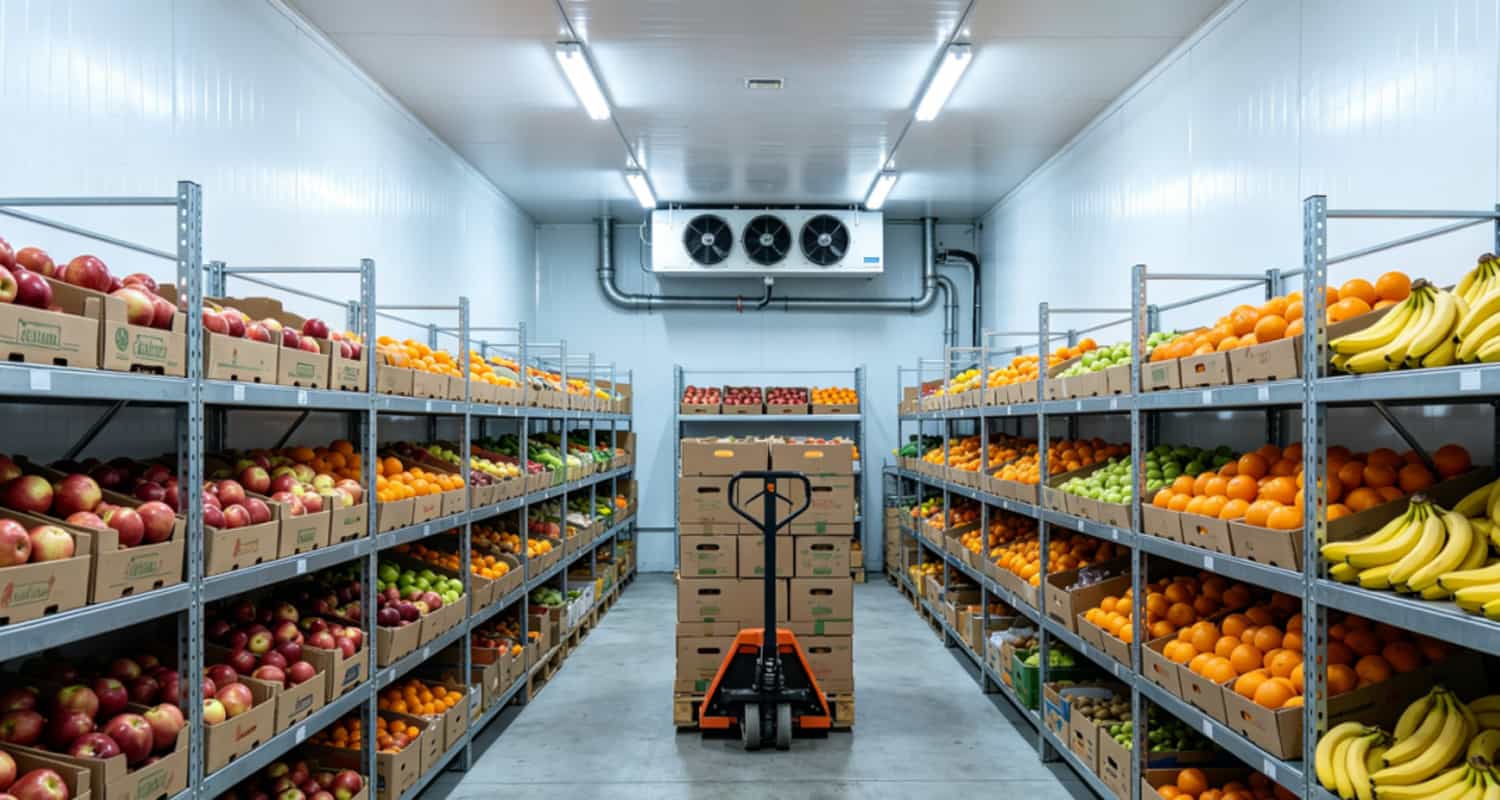
Summer is here, and cold storage owners are having sleepless nights again.
Every year from June to September, cold storage operators face two real problems: a sharp rise in electricity bills and an increased risk of power outages.
Let's do a simple calculation: a medium-sized cold storage facility with a capacity of around 2000 cubic meters consumes between 800 and 1200 kWh of electricity per day. In summer, when outdoor temperatures rise above 35 degrees Celsius, refrigeration units operate for longer periods, and daily electricity consumption can reach as high as 1500 kWh. Based on the average industrial and commercial electricity price of 0.8 yuan/kWh, monthly electricity bills exceed 36,000 yuan, 30% to 50% higher than in spring and autumn.
Meanwhile, summer is also the peak season for the power grid, and some areas may experience power outages. If a power outage lasts for more than 2 hours, the temperature inside the storage facility can rise to below -10 degrees Celsius, causing frozen goods to thaw and spoil, resulting in losses of hundreds of thousands of yuan.
So, is there a way to simultaneously reduce electricity costs and mitigate the risk of power outages? Energy storage systems offer a viable solution: they can charge when electricity prices are low and discharge when prices are high, helping cold storage facilities reduce electricity costs; simultaneously, they act as backup power, automatically supplying power to critical equipment during power outages.
Currently, the application of energy storage combined with cold storage mainly follows two models: one is integrated photovoltaic-storage-charging, and the other is a standalone energy storage system. Both approaches have proven economically viable in numerous cold chain projects across the country.
Why is electricity consumption for cold storage particularly problematic in summer?
Because the load curve of cold storage differs from that of ordinary factories. Refrigeration units need to operate continuously for 24 hours, but their power output fluctuates with the temperature of the storage facility and the ambient temperature. During off-peak hours at night when electricity prices are low, the units can operate at full capacity to store cold; during peak hours during the day, the temperature is maintained by the insulation performance of the storage structure, with the units starting and stopping intermittently. This characteristic is inherently suitable for "peak shaving"—with an energy storage system, electricity can be stored at night and discharged during the day, shifting peak electricity consumption to off-peak hours.
However, the problem lies in the fact that electricity consumption in cold storage facilities surges during the summer. According to statistics from the Cold Chain Logistics Professional Committee of the China Federation of Logistics and Purchasing, the total capacity of cold storage facilities nationwide in 2024 was approximately 250 million cubic meters, with annual electricity consumption exceeding 40 billion kilowatt-hours, of which about 40% is concentrated between June and September. If each medium-sized cold storage facility were equipped with a 500-kilowatt-hour energy storage system, the peak-hour electricity that could be transferred nationwide annually would exceed 5 billion kilowatt-hours. Based on a peak-valley price difference of 0.8 yuan per kilowatt-hour, this could save approximately 4 billion yuan in electricity costs annually.
This figure forms the commercial foundation for energy storage entering the cold storage market.
1. Integrated Photovoltaic-Storage-Charging Energy Station
This model integrates photovoltaic power generation, energy storage batteries, and charging piles, operating in conjunction with a cold storage facility. Specifically, solar panels are installed on the roof of the cold storage facility or on open ground within the facility, along with a supporting energy storage system. Simultaneously, charging services are provided for electric refrigerated trucks within the facility. During the day, photovoltaic power prioritizes supplying the cold storage, with excess electricity stored in the batteries. At night or on cloudy or rainy days, the energy storage system discharges to power the cold storage. This significantly improves the cold storage's electricity self-sufficiency rate and reduces its dependence on the external power grid.
Taking a 1 MW photovoltaic system as an example, in regions with good sunshine conditions such as Shandong and Jiangsu, the annual power generation is approximately 1.1 million kWh. Assuming a daily electricity consumption of 1000 kWh for the cold storage, the photovoltaic system can cover about 30% of the electricity demand. With 2 MWh of energy storage, the remaining 70% of peak-hour electricity consumption can be shifted to off-peak hours, resulting in an overall reduction of over 50% in the cold storage's annual electricity costs.
In actual projects, the photovoltaic-storage-charging model combined with cold storage has already demonstrated successful results.
In January 2025, the first national demonstration station combining perovskite photovoltaic (PV) and semi-solid-state energy storage was put into operation at the Tianzhuang Cold Chain Logistics Park in Foshan, Guangdong. The project, with a total investment of approximately 18 million yuan, features 4.25 MW of PV power and 105 kW/215 kWh of energy storage, equipped with fully liquid-cooled supercharging guns and fast charging piles.
This project applies perovskite PV modules to building glass curtain walls and carports, maintaining good power generation efficiency even in low-light conditions. The energy storage component uses semi-solid-state batteries, offering higher safety than ordinary lithium batteries. For operation and maintenance, intelligent cleaning robots automatically clean dust from the PV panel surfaces.
The Nanjing National Backbone Cold Chain Logistics Base in Jiangsu is a planned ultra-large-scale zero-carbon smart agricultural wholesale hub. Covering an area of 530 mu (approximately 35 hectares), the project is planned to be constructed in three phases. It will fully utilize rooftop solar PV panels, combined with lithium iron phosphate energy storage stations, to build an integrated PV-storage-charging microgrid. It is expected to meet 30% of the electricity demand for cold chain warehousing and reduce carbon emissions by approximately 12,000 tons annually.
The project officially commenced construction on October 15, 2025. It is understood that the project also reserves a rooftop drone takeoff and landing area—delivery drones taking off from the cold storage roof will be powered entirely by photovoltaics and energy storage.
Applicable conditions for the photovoltaic-storage-charging model: The photovoltaic-storage-charging integrated energy station model is suitable for large-scale cold chain logistics parks, national backbone cold chain bases, food processing plants, etc., with large rooftop areas or idle land. The main advantages of this model are low long-term electricity costs, a high self-sufficiency rate in green energy, and the ability to apply for green building or zero-carbon park subsidies.
The disadvantages are the large initial investment, typically requiring several million or even tens of millions of yuan, with an investment recovery period of approximately 6 to 8 years. Furthermore, the project requires coordination of power grid connection and related procedures.
2. Industrial and Commercial Energy Storage Plus Cold Storage
If the cold storage is small or does not meet the conditions for installing photovoltaics, a separate industrial and commercial energy storage system can be deployed. The core profit of this model comes from peak-valley electricity price arbitrage, specifically charging the energy storage system during off-peak hours at night and discharging it during peak hours in the daytime to power the cold storage facility.
For example, a cold storage facility in a certain area is equipped with a 500 kWh energy storage system. During off-peak hours at night (usually 11:00 PM to 7:00 AM the next day), the electricity price is approximately 0.3 yuan/kWh; during peak hours in the daytime (10:00 AM to 3:00 PM), the price is approximately 1.0 yuan/kWh. With one charge and one discharge per day, the daily arbitrage profit is approximately (1.0 - 0.3) × 500 × 0.9 (charge/discharge efficiency) = 315 yuan. Assuming 330 operating days per year, the annual profit is approximately 104,000 yuan. With a system investment of 0.9 yuan/kWh, the investment for 500 kWh is approximately 450,000 yuan, with a payback period of approximately 4.3 years.
This does not include savings on demand-based electricity costs and the value of backup power. Energy storage systems can also reduce the maximum demand electricity cost of transformers because they can supplement power during peak hours, preventing transformer overload. Simultaneously, energy storage systems have off-grid backup power capabilities, automatically switching to power critical equipment such as cold storage compressors and fans for several hours after a mains power outage. Therefore, in actual projects, the benefits are often even higher.
Sichuan Chengdu Xinhua West Dairy: This factory processes over 300 tons of fresh milk daily, and the cold chain preservation and continuous processing stages place high demands on power supply reliability. The factory has deployed a 1.25 MW/2.62 MWh user-side energy storage system to leverage peak-valley price arbitrage to reduce electricity costs, while also serving as a backup power source to prevent spoilage of fresh milk due to unexpected power outages.
Taiwan Chenxin Food Factory: This food factory has deployed a 514 kWh post-meter energy storage system as backup power for its cold storage warehouses. Statistics from Taiwan Power Company (Taiwan Power) show that the region experiences an average of about 1.2 power outages per year, with an average restoration time of about 2.5 hours per outage. With energy storage, the factory avoids potential losses of approximately 300,000 yuan per power outage. The system also participates in Taipower's demand response project, receiving an additional subsidy of approximately 50,000 yuan annually.
Odessa Port, Ukraine: Winter storms in Ukraine cause frequent grid fluctuations. The port's cold chain warehouse has deployed two 261 kWh liquid-cooled energy storage systems to provide backup power for an 85 kW cold storage compressor. The system operated continuously at an ambient temperature of -25 degrees Celsius, replacing diesel generators with a runtime of less than 8 hours. The project developer publicly stated that this is the only energy solution with zero downtime in the past five years.
The CCCC Smart Industrial Park in Wuhan, Hubei Province. This park is the first fully functional cold chain smart industrial park in Central China, deploying a 100 kW/215 kWh outdoor cabinet energy storage system, primarily used for peak shaving and valley filling to reduce the park's electricity costs. According to the project disclosure, the local peak-valley price difference is approximately 0.78 yuan/kWh, resulting in an annual arbitrage profit of approximately (0.78 × 215 × 0.9 × 330) = 49,800 yuan. The system investment is approximately 190,000 yuan, with a payback period of approximately 3.8 years.
Compared to integrated photovoltaic-storage-charging models, commercial and industrial energy storage models are more suitable for scenarios such as food processing plants, small and medium-sized cold storage facilities, supermarket distribution centers, and pharmaceutical cold storage facilities. Its main advantage is a lower investment threshold; the investment for an energy storage system in a medium-sized cold storage facility typically ranges from several hundred thousand to several million yuan, with a payback period of approximately 3 to 5 years. Many projects can adopt the Energy Performance Contracting (EPC) model, where energy storage service providers invest in and construct the facilities, and the owners share the electricity cost savings, requiring no upfront investment.
However, it's important to note that returns are highly dependent on local peak-valley electricity price differences. As of the end of 2025, the average peak-valley price difference for industrial and commercial electricity across all provinces in China was approximately RMB 0.72/kWh, with provinces like Guangdong, Zhejiang, Jiangsu, and Shandong exceeding RMB 0.85/kWh, while some central and western provinces were below RMB 0.5/kWh. In areas with price differences below RMB 0.6/kWh, the payback period for energy storage projects may exceed 7 years, significantly reducing their economic viability.
In summary, if a cold storage facility has over 5,000 square meters of usable rooftop area and annual electricity consumption exceeding 2 million kWh, the photovoltaic-storage-charging (PV-SCDMA) model offers higher long-term returns. If the cold storage facility is smaller or funds are limited, and a return on investment is expected within 3 years, the industrial and commercial energy storage model is more suitable.



5th floor, Block A, Science Avenue,High-tech District, Hefei , Anhui .China
 Home
Home