



What Are You Looking For?
 Home
/
Home
/
A fire broke out in the fire station's "backyard": a lithium battery burned, costing 17.48 million RMB!
Jun 16, 2026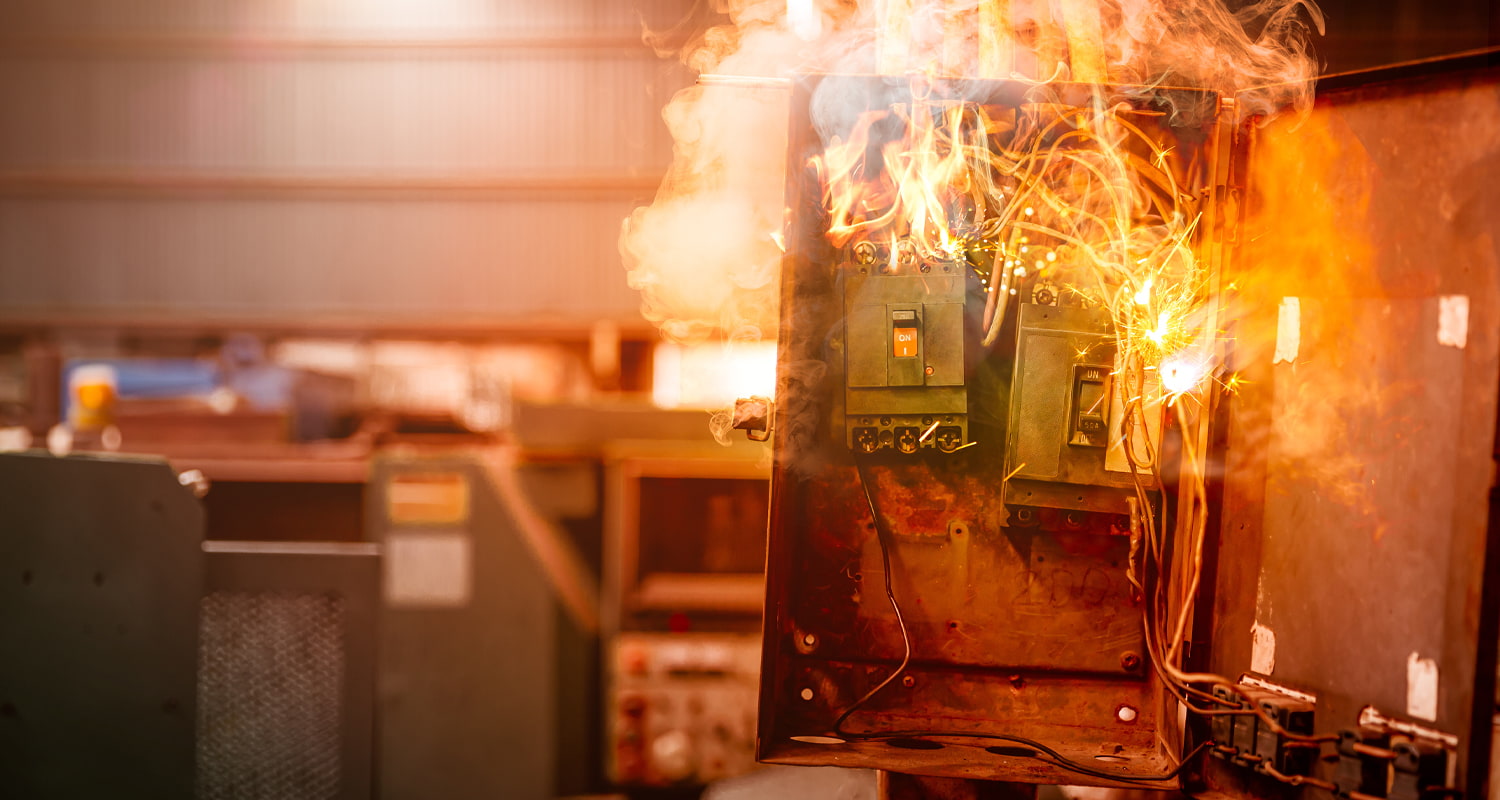
If fire prevention were a subject, the fire brigade would undoubtedly score full marks. However, one day in August 2024, the Kashgar Fire and Rescue Brigade's own supply warehouse was completely destroyed by fire.
On June 8, 2026, the Kashgar Emergency Management Bureau published the "Investigation Report on the '8.4' Major Fire Accident at the Kashgar Fire and Rescue Brigade's Supply Warehouse" on its official website. The report ultimately concluded that the fire was caused by a thermal runaway malfunction of a lithium battery in a portable lighting system, which burned down the entire main building of the storage warehouse and the equipment and supplies stored inside. The fire affected an area of approximately 960 square meters, resulting in direct property losses of approximately 17.4888 million RMB.
Why would a specialized firefighting team have its own warehouse burned down by a small lithium battery? Let's see what the accident investigation report says.
I. Scene Reconstruction: 101 Firefighters Fighting Their Own Fire
Let's rewind to the afternoon of August 4, 2024.
At approximately 5:29 PM, three sanitation workers from the Kashgar Fire and Rescue Brigade were cleaning the asphalt track on the southwest side of the compound when they noticed flames and black smoke billowing from the north window of the storage warehouse. They immediately informed a passing firefighter, who promptly reported to the commander of the full-duty command center. The command center then quickly dispatched resources.
This deployment triggered a large-scale "self-rescue operation." The combat support unit, three brigades from Kashgar City and Shufu and Shule counties, five fire and rescue stations, the Southern Xinjiang Command, the full-duty command center, and standby personnel rushed to the scene, totaling 25 fire trucks and 101 firefighters. They carried 203 tons of water and 29.5 tons of foam concentrate; their manpower was complete, and their professionalism was impeccable. However, no matter how quickly they rushed in, they couldn't withstand the fierce fire. The fire was effectively controlled at 6:50 PM, extinguished at 7:31 PM, and the fire scene was not completely cleared until 8:51 PM.
Ultimately, the fire burned an area of 960 square meters, completely destroying the main building of the storage warehouse and all the equipment and supplies stored inside, resulting in direct property losses of approximately 17.4888 million RMB. Fortunately, there were no casualties, a stroke of luck amidst the misfortune.
After the fire, the accident investigation team spent over a year repeatedly investigating and collecting evidence. They did a great deal of work—ruling out all common options such as arson, lightning strikes, electrical wiring faults, and external fire sources, even using simulation experiments to rule out the possibility that the portable lighting system ignited the packaging. Finally, the Tianjin Fire Evidence Identification Center found the answer in the melting marks on the battery pack cable trays: these were "electrothermal melting marks," indicating that the initial occurrence in that area was thermal runaway of the lithium battery, and the temperature was very high.
Therefore, the conclusion of the fire investigation was that the source of the fire was a portable lighting system in the northwest part of warehouse No. 4. Its lithium battery malfunctioned, and after thermal runaway, it ignited the surrounding cardboard boxes and other flammable materials, ultimately causing a major disaster.
II. Popular Science Time: Why are lithium batteries so "hot"?
The fire wasn't caused by some earth-shattering explosion, but rather by a lithium battery, a common household item. The culprit was thermal runaway. While lithium battery thermal runaway sounds technical, it's actually quite simple to understand once you take it apart.
We can think of a lithium battery as a sealed "small room"—containing the positive electrode material, negative electrode material, and electrolyte. When the battery temperature rises to around 200 degrees Celsius, the positive electrode material decomposes and releases oxygen, while the metallic lithium negative electrode reacts with the electrolyte to produce flammable gases such as hydrogen and methane.
In other words, in this "small room," oxygen and flammable gases coexist. A spark can cause violent combustion or even an explosion. Once thermal runaway is triggered, the internal exothermic reaction is intense, with surface temperatures exceeding 1000 degrees Celsius, far surpassing the ignition point of most flammable materials.
What's even more troublesome is that conventional dry powder fire extinguishers are ineffective when lithium batteries catch fire. Because most of the exothermic reactions occur inside the battery casing, fire extinguishing agents cannot penetrate the core area to interrupt the chain reaction. Even after the flames are extinguished, the internal chemical reactions continue, and the temperature doesn't drop—and as long as the internal temperature doesn't decrease, thermal runaway won't stop, and reignition is always a possibility.
This is why, in real fires, firefighters often need to continuously pour water on burning battery packs for hours or even days.
Of course, not all scenarios are suitable for large amounts of water—the risks of battery short circuits and electric shock remain. Therefore, lithium battery fire safety remains a global challenge.
III. Behind the Accident: Three Hidden Concerns
The fire at the Kashgar fire station warehouse has exposed at least three hidden concerns in the lithium battery production and application market.
First Concern: Insufficient Awareness of Dangers, Even Professionals Fall into Trap.
The investigation report states: "The warehouse manager lacked professional knowledge and did not fully understand the characteristics of lithium batteries, such as their susceptibility to thermal runaway, explosion, or fire. He violated management regulations by temporarily storing uninspected equipment in the material storage warehouse, causing the fire."
Even those specifically responsible for fire safety lacked a comprehensive understanding of the dangerous characteristics of lithium batteries—what about ordinary enterprises and warehouses? The answer is predictable. Professional education remains a long and arduous task.
Second Concern: Blind Spots in Management Systems.
The report also points out that the logistics equipment department's daily management was not meticulous. Internal management regulations only specified "equipment storage standards after acceptance," but lacked regulations for "temporarily stored equipment." A portable lighting system that had not undergone acceptance was simply pushed into warehouse number 4 and placed next to a pile of cardboard boxes.
Another factor was added: the warehouse contained a large quantity of flammable and combustible materials such as transfer boxes and corrugated cardboard boxes, which have high calorific value and a large fire load. Once the lithium batteries caught fire, the fire spread rapidly, turning a small fire into a large one.
A small regulatory loophole, coupled with insufficient professional knowledge, resulted in a "tuition fee" of 17.48 million yuan. If this 17.48 million yuan can serve as a wake-up call and a lesson for countless manufacturers, then it will have some value.
The third hidden concern: accountability has been pursued, but the root cause has not been eradicated.
The investigation report recommended holding two key leaders, one department head, and one firefighter of the Kashgar Fire and Rescue Brigade accountable. However, it is even more important to recognize that the responsible parties on the product side must also be "named": Jingquan Lighting Technology Co., Ltd., the manufacturer of the mobile lighting system, and Baoding Jingbei Technology Co., Ltd., the seller of the system, were recommended to be transferred to the market supervision department for investigation and prosecution for producing and selling products without quality certificates.
IV. Larger Scenario: National Energy Storage is "Rapidly Expanding," Can Safety Keep Up?
The fire in Kashgar has once again highlighted the critical importance of lithium battery safety management, especially in the field of power plant energy storage. Statistics show that from 2011 to 2025, over 160 electrochemical energy storage safety accidents have occurred globally, with ternary lithium battery accidents accounting for over 65%. Particularly alarming is that 80% of these accidents occur under normal power plant operating conditions.
On June 12th, an outdoor energy storage cabinet in the Youth Entrepreneurship Park on Jinglong Road, Longhua Street, Longhua District, Shenzhen, caught fire due to charging overload. A large fire broke out, accompanied by thick smoke and explosions. Fortunately, firefighters arrived promptly and extinguished the flames. According to the Shenzhen Fire Department, no injuries were reported.
Preliminary on-site investigation by technicians indicates that the fire was caused by charging overload of the energy storage cabinet, leading to an abnormal increase in battery temperature and subsequently thermal runaway.
Countless cases have repeatedly demonstrated that energy storage safety is a global "must-answer question."
This serious situation is forcing the energy storage industry to accelerate its efforts in fire protection technology. Across the country, from early warning to firefighting, from battery cells to the entire power plant, a fierce technological race is underway regarding "energy storage safety."



5th floor, Block A, Science Avenue,High-tech District, Hefei , Anhui .China