



What Are You Looking For?
Nissan has installed solar panels on its electric vehicles!
Feb 04, 2026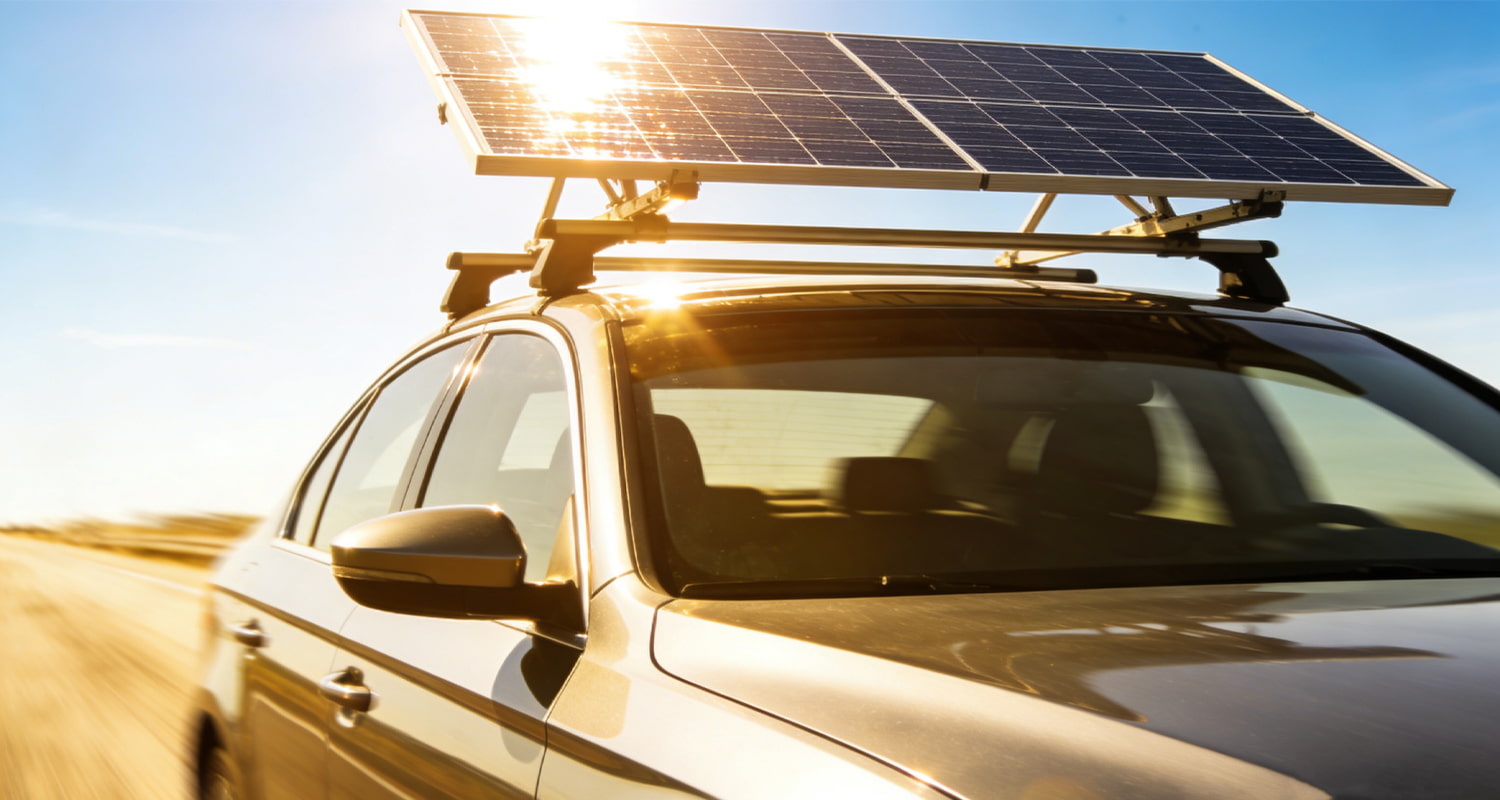
According to foreign media outlet InsideEVs, Nissan recently unveiled a unique Ariya concept car. The car's biggest highlight is its collaboration with Dutch company Lightyear, which covers approximately 3.8 square meters of solar panels on the hood, roof, and tailgate. Under sufficient sunlight, this system can add up to 14.3 miles (about 23 kilometers) of range per day.
While this solar-powered concept car visually demonstrates the potential of using solar energy to alleviate range anxiety, given Lightyear's bankruptcy and the widespread production difficulties faced by competitors, Nissan has explicitly stated that there are currently no plans for mass production of this car.
Nissan's attempt seems more like a technological trial, aiming to verify whether onboard photovoltaic technology is an effective solution for alleviating range anxiety.
Geographic Location Determines the Upper Limit: Range Increase of Only Three Kilometers
Although the concept of "using solar energy for charging" is quite attractive, real-world test data for the Nissan Ariya clearly demonstrates the limitations of this technology, which is heavily reliant on weather conditions.
Test results show that geographical location and weather have a significant impact on the Ariya's charging efficiency. In sunny Dubai, the Ariya can travel an extra 13.2 miles (approximately 21.2 kilometers) per day using solar power; however, in cloudy London, the increase is only 6.3 miles (approximately 10.2 kilometers) per day.
To test the vehicle's performance under these conditions, Nissan conducted a two-hour, 50-mile (approximately 80-kilometer) test on a sunny day. The results showed that the solar system only replenished the battery by 0.5 kWh—equivalent to an increase of less than 2 miles (approximately 3 kilometers) in range after this trip.
For electric vehicles with ranges often exceeding several hundred kilometers, this increase is indeed negligible.
However, Nissan offers another perspective: over a yearly period, for owners who primarily use the vehicle for daily commuting and frequently park outdoors, this system could theoretically reduce charging frequency by 35% to 65%.
This means that although the range increase each time is small, for car owners whose daily driving distance is not long and charging is not very convenient, the cumulative effect over time, this system can still bring real convenience and peace of mind.
Further Setbacks for Competitors: Mass Production Remains a Challenge
Looking at the market as a whole, Nissan is not the only automaker attempting to equip electric vehicles with solar panels, but past cases have shown that the commercialization of solar-powered cars is extremely difficult.
Lightyear, a once-promising Dutch startup that planned to manufacture dedicated solar-powered electric vehicles, ultimately went bankrupt due to a broken funding chain and manufacturing difficulties; another company, Aptera, although claiming to begin limited production this year, still has doubts about its ability to deliver on time due to repeated delays in delivery.
Even automotive giants like Toyota and Hyundai have had limited success with their attempts at mass production. The Hyundai Ioniq 5, with its solar roof available in some markets, only adds about 3 miles (about 5 kilometers) of range per day under ideal conditions; the Toyota bZ4X, even in sunny Nagoya, Japan, only adds about 7.2 miles (about 11.6 kilometers) per day on average.
These examples all point to the same reality: currently, the revenue from solar power generation is insufficient to cover its high manufacturing costs. Nissan clearly understands this, and therefore maintains a pragmatic attitude towards the Ariya concept car, explicitly stating that there are no plans for mass production at this time.
However, Nissan has not completely given up. For its Sakura micro electric car sold in Japan, it offers an optional "Ao-Solar Extender" roof sunshade, which theoretically adds about 1860 miles (about 3000 kilometers) of range per year.
This indicates that Nissan prefers to test the waters on a small scale with specific models rather than hastily rolling it out nationwide.
Conclusion: Range Anxiety Unlikely to Be Eradicated, But Technological Exploration is Worthy of Acknowledgment
The unveiling of the Nissan Ariya concept car has once again brought the topic of solar-powered cars into the public eye. Currently, extremely low conversion efficiency and high retrofit costs mean that solar energy cannot replace charging stations.
However, Nissan's attempt is commendable; it shows us the possibility of technological progress—as photovoltaic efficiency improves, cars may eventually transform from mere energy consumers into energy producers. But until that day arrives, finding a charging station remains the most reliable option.



5th floor, Block A, Science Avenue,High-tech District, Hefei , Anhui .China
 Home
Home